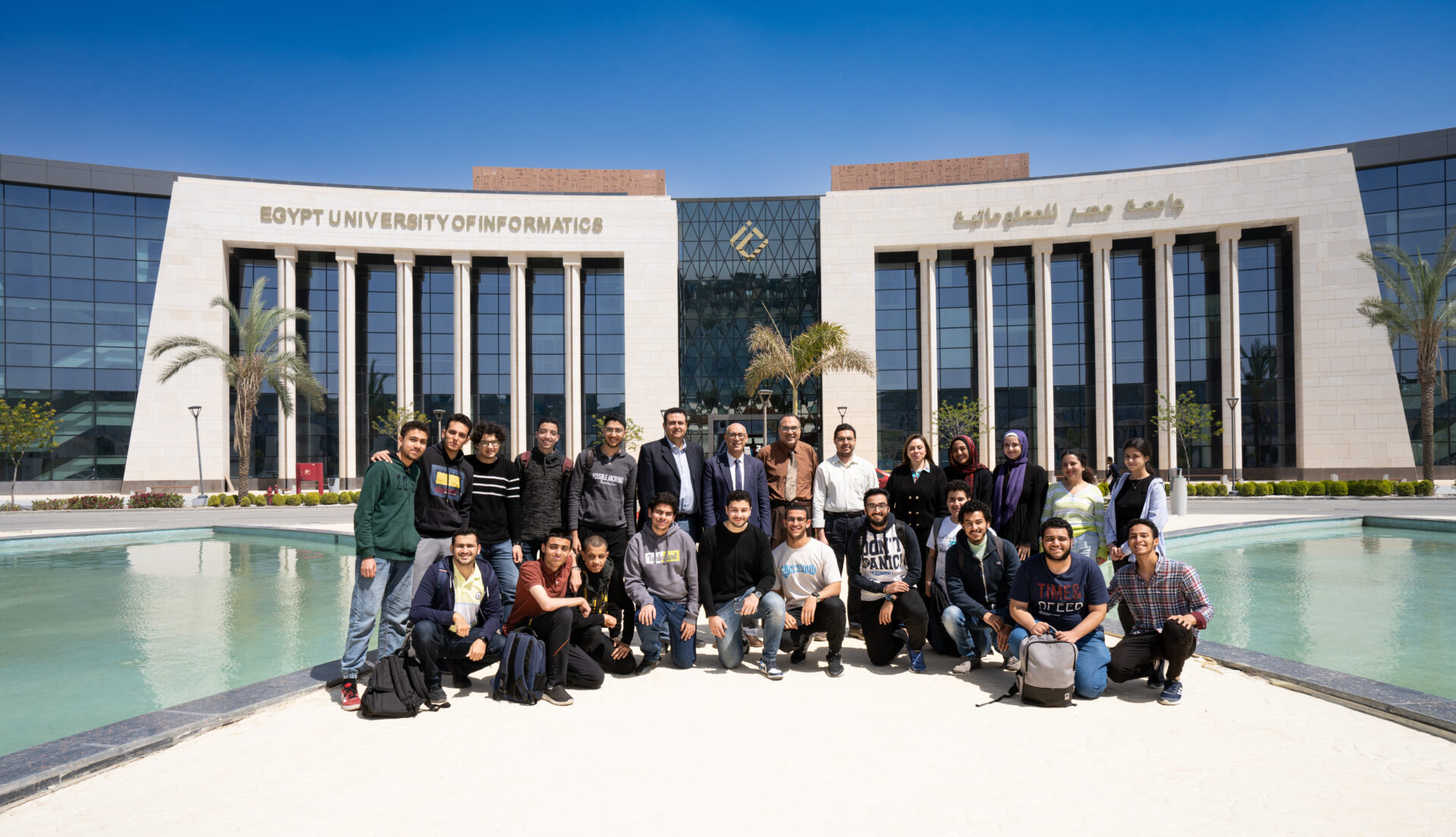


Proposal to restructure Engineering years of study to 4 starting next year
Prof. Ahmed Hamad, Acting President of EUI, announced amendments to the bylaws of the Faculty of Engineering, reducing the study duration to four years in line with international standards adopted by leading engineering schools worldwide. These standards are also applied by partner universities that have cooperation agreements with EUI.
Prof. Hamad stated that the new bylaws will be submitted shortly to the Supreme Council of Universities for approval, with implementation scheduled to begin in the next academic year.
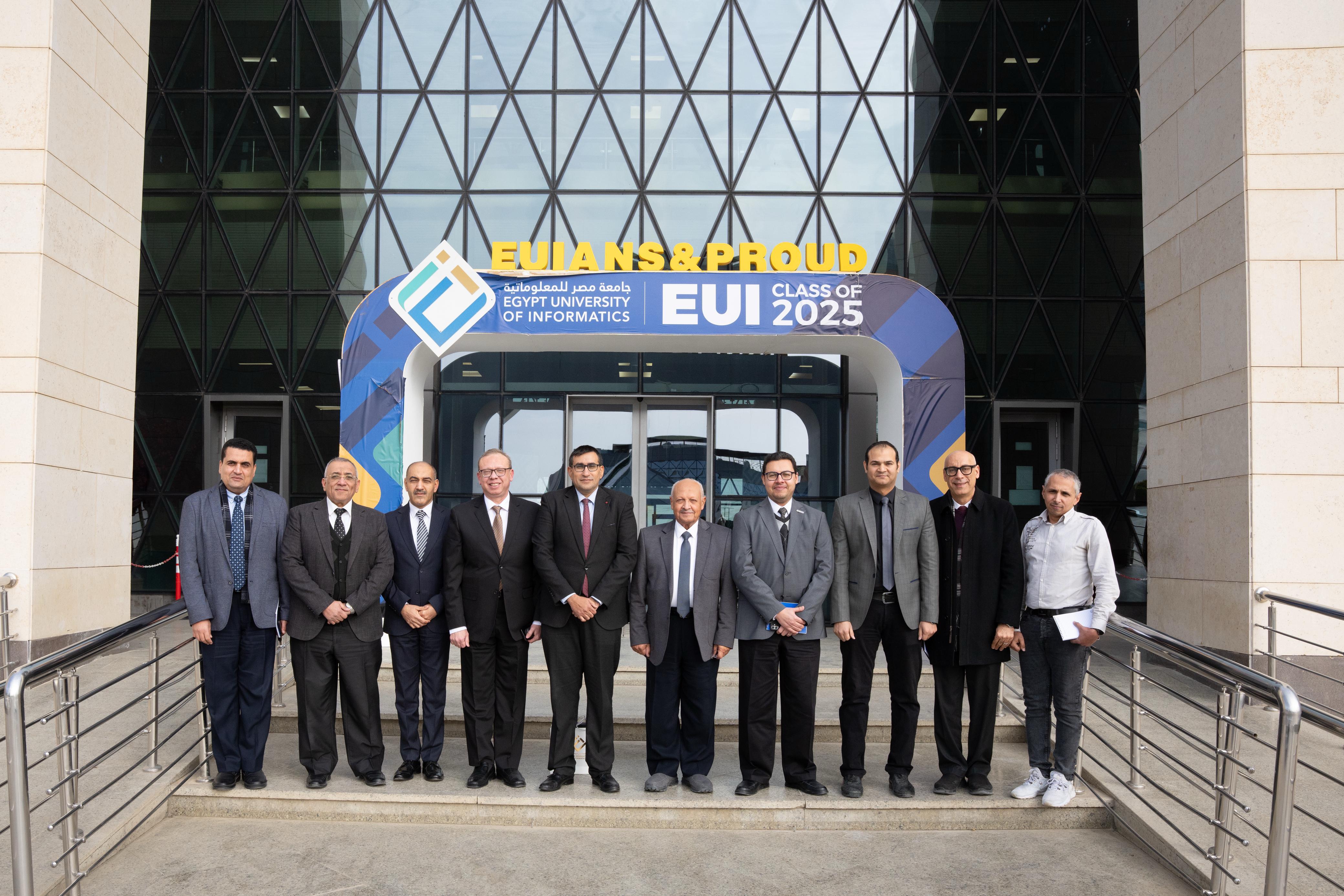
He explained that the proposed amendments were discussed during the first meeting of the Faculty of Engineering Advisory Board, held last Tuesday, with the participation of a distinguished group of experts from the communications and information technology sector. The meeting also addressed several academic issues and EUI’s efforts to establish strong and effective links with the industrial and technological sectors, aiming to leverage academic expertise to solve challenges facing Egyptian industry, enhance its competitiveness, and prepare a new generation of specialists for future jobs driven by artificial intelligence, innovation, and entrepreneurship.
Prof. Hamad added that the Advisory Board includes Dr. Maged Ismail, CEO of the Egyptian Space Agency; Prof. Ahmed Khattab, Executive Director of the National Telecommunication Institute and Member of EUI’s Board of Trustees; Dr. Ahmed Tantawy, Director of the Applied Innovation Center at the Ministry of Communications and Information Technology; Dr. Yasser Abdel Bari, Executive Director of the Electronics Industry Development Program at ITIDA; Dr. Mourad Kamel Mahmoud, Head of Transmission Sectors at Telecom Egypt; and Ms. Asmaa Serag El-Din Hamed, Executive Director of the Huawei ICT Academy, in addition to the Faculty Council.
He noted that the meeting provided an opportunity to assess the progress achieved by the Faculty since its establishment, as well as to explore future strategic priorities. Prof. Hamad also revealed that EUI plans to introduce targeted scholarships starting next year, as part of a package of incentives approved by the university’s Board of Trustees to support scientific research and enhance the academic and practical performance of faculty members.
For his part, Prof. Ashraf Mahran, Dean of the Faculty of Engineering, stated that the Advisory Board meeting also addressed ways to strengthen cooperation and coordination between the Faculty and the industrial sector. This collaboration aims to update academic, study, and research plans in line with real market needs, ensuring that graduates gain practical experience, enabling them to address challenges faced by various industrial sectors and meet labor market demands. Discussions also emphasized expanding student training opportunities, involving industry partners in supervising graduation projects, organizing awareness seminars about career opportunities, and supporting students in becoming future entrepreneurs.
During the meeting, Prof. Mahran presented an overview of the faculty’s programs, objectives, academic and research interests, available academic and technical capabilities, as well as the faculty’s strategic plan for the coming years.
Regarding the role of the Advisory Board, Prof. Mahran explained that its responsibilities include strengthening community partnerships with industrial and civil society institutions through consultancy, research and development; contributing to the development of academic programs and curricula in accordance with labor market requirements, expanding student training opportunities; transferring practical expertise, supporting faculty members and students in conducting applied research within industrial companies; and providing recommendations to guide the Faculty’s strategic direction.
He added that, under the new bylaws, the Faculty of Engineering will offer four main programs: Electronics and Communications Engineering, Computer Engineering, Mechanical Engineering, and Architectural Engineering, in accordance with the standards of the Supreme Council of Universities and local and international quality assurance and accreditation requirements.