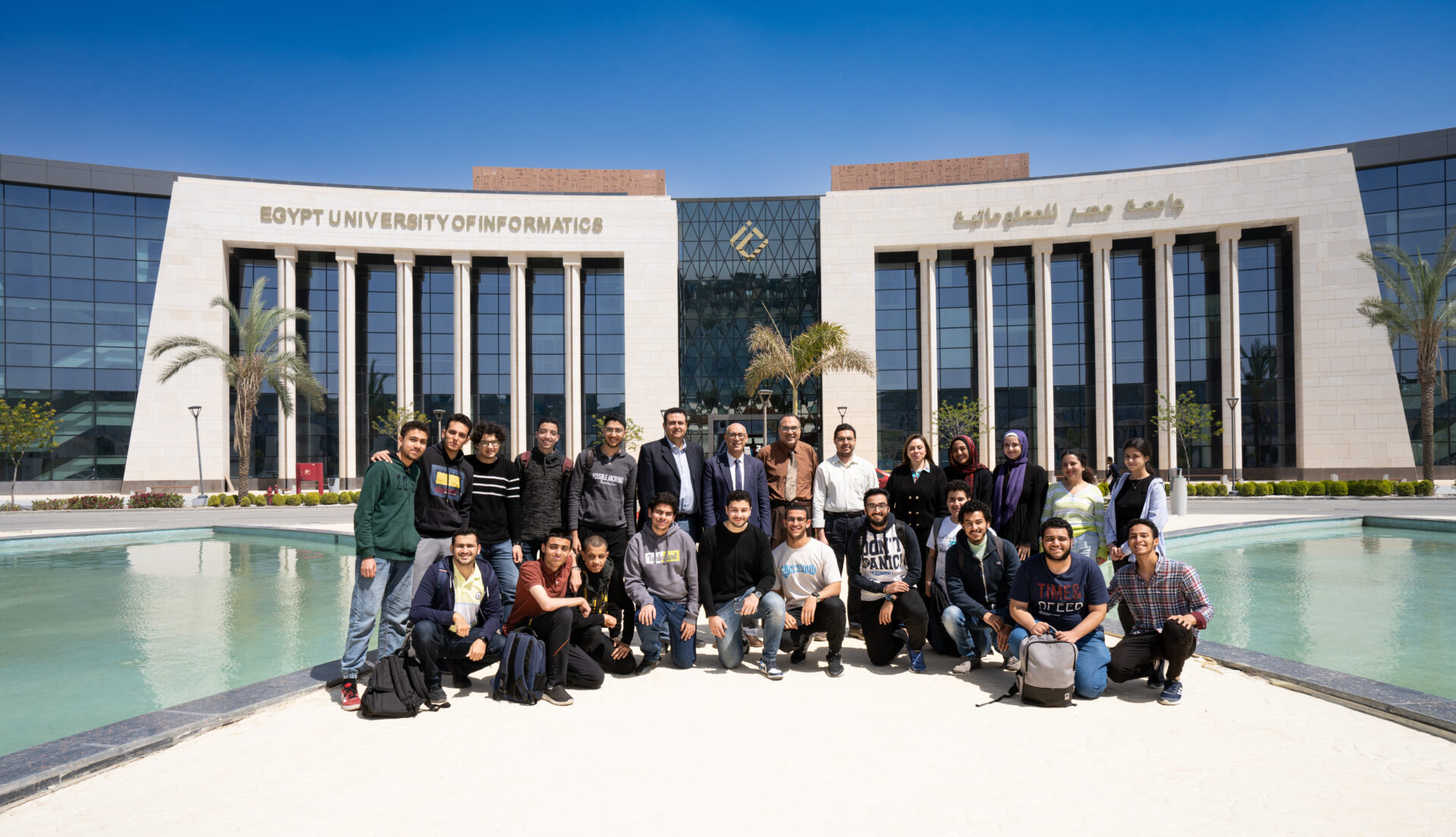


Digital Interior Design Students merge academia with Industry
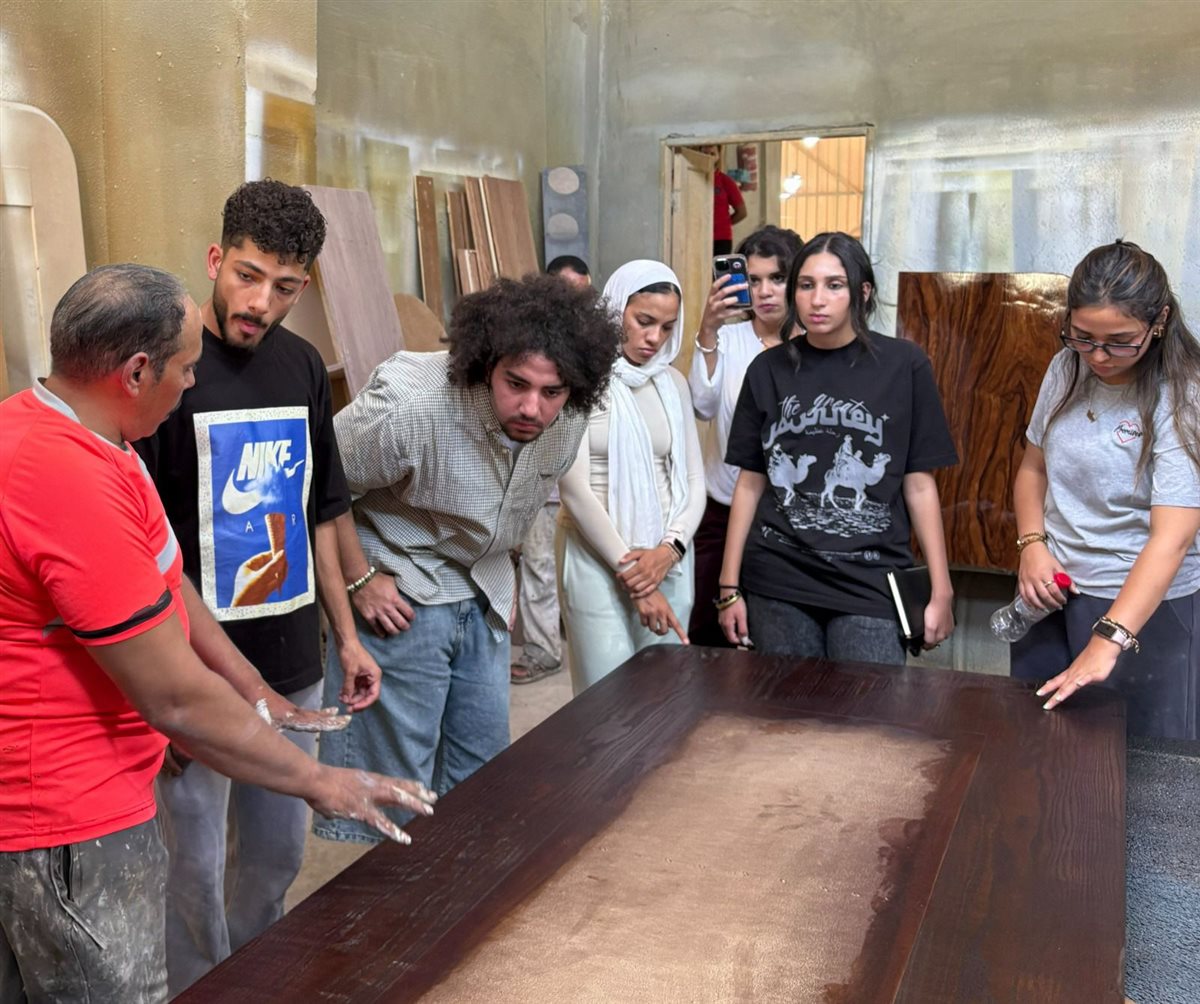
Students of the Digital Interior Design Program at the Faculty of Digital Arts and Design, recently participated in a series of educational field trips aimed at strengthening the link between academic study and real-world industrial applications.
Prof. Ahmed Hamad, Acting President of Egypt University of Informatics , emphasized the importance of integrating university education with hands-on practical training in factories and companies to enhance students’ skills and improve their employability. He highlighted that such integration not only benefits young talents but also contributes to the competitiveness of the national economy.
Prof. Hamad noted that EUI adopts this approach through intensified cooperation with companies in the telecommunications, information technology, business technology, and industrial sectors. He explained that artificial intelligence and advanced technologies have become common denominators across many industries, helping to bridge the technological gap between Egyptian industries and their global counterparts, while enhancing the competitiveness of Egyptian products locally and in export markets.
He added that Egypt University of Informatics, through the Faculty of Digital Arts and Design, is currently expanding its collaboration with the industrial sector, particularly in areas where Egypt enjoys a competitive advantage, such as the furniture industry. In this context, the faculty organized several field visits for students of the Digital Interior Design Program, including visits to Damietta Furniture City, factories of one of Egypt’s leading furniture companies, and a major specialized furniture exhibition.
These visits aimed to familiarize students with the latest trends in design, materials, finishes, paints, accessories, and all elements involved in furniture manufacturing, enabling them to stay aligned with industry practices while enriching their artistic knowledge and enhancing their creative and innovative design skills.
Prof. Ashraf Zaki, Dean of the Faculty of Digital Arts and Design, explained that the visit to Damietta Furniture City was designed to enhance students’ practical experience, as the city represents one of Egypt’s most prominent furniture manufacturing hubs. He stated that the factories provided students with firsthand exposure to the latest furniture production and interior design technologies, as well as the full manufacturing process from concept to final product.
He added that the visit also included participation in the Damietta Furniture Festival, one of the most significant events bringing together furniture designers and manufacturers at both local and international levels. The festival showcases the latest innovations and industry trends, offering students insight into advanced production techniques that contribute to improving furniture quality.
Regarding the visit to one of Egypt’s largest furniture companies, Dr. Zaki noted that students toured the company’s factories in Badr City and its showroom in Cairo. This allowed students to explore modern furniture design and execution techniques, interact with industry professionals, and compare different approaches to design and manufacturing. The visit also helped students better understand production technologies and product presentation in a competitive market environment, a goal further reinforced through their visit to one of the largest specialized furniture and décor exhibitions in Egypt and the Middle East.
Dr. Adnan Al-Hallougi, Director of the Digital Interior Design Program, confirmed that the program continues to organize educational visits, including a recent visit to an architectural building under construction in the New Administrative Capital. The visit focused on understanding the stages of interior design execution, finishing techniques, and the application of both traditional and advanced finishing technologies. This experience helped students comprehend the strong connection between architectural design and practical implementation, as well as the importance of adhering to construction standards and specifications.
Dr. Al-Hallougi also highlighted that the program recently hosted a workshop titled “From Concept to Execution: Thinking Methods for Interior Designers,” delivered by Eng. Akram Hamed Amr, co-founder of one of the specialized companies. The interactive workshop aimed to develop students’ creative and professional skills by introducing design thinking principles and their practical applications in interior design, enabling students to transform theoretical ideas into tangible design solutions and strengthening the link between creative vision and practical execution.