

New Engineering Tracks, Shorter Degree
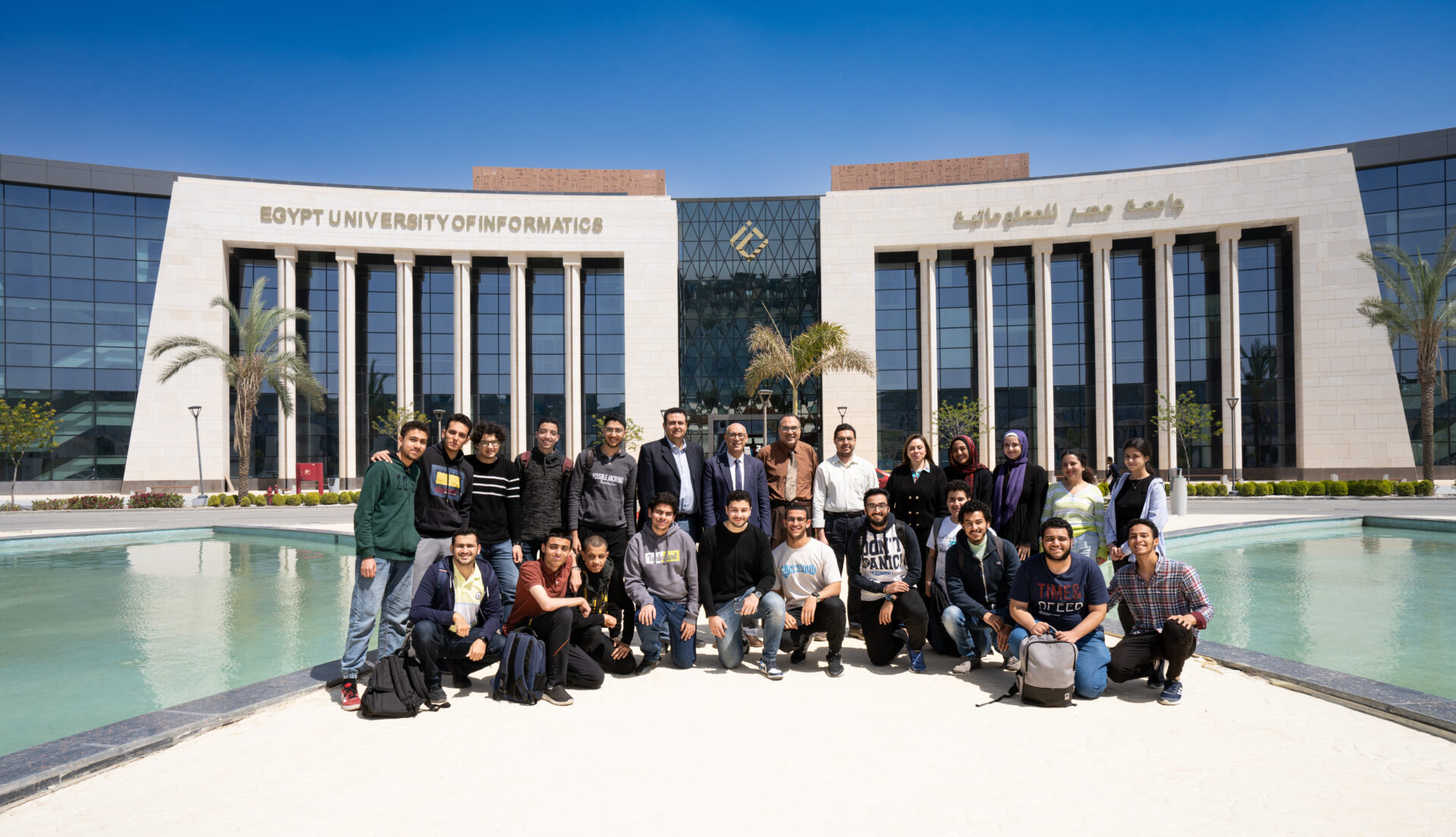
Prof. Ahmed Hamad, Acting President of the Egypt University of Informatics (EUI), announced that the university will begin implementing a newly revised regulatory framework for its Faculty of Engineering starting with the 2026/2027 academic year, following approval from Egypt's Supreme Council of Universities.
Prof. Hamad said the revised regulations were designed to bring the faculty in line with the practices of the world's leading engineering schools — most notably by shortening the duration of study from five years to four, matching the standard followed at top international institutions. He added that the update reflects global best practices across the faculty's various engineering disciplines, aiming to ensure graduates reach the highest levels of technical competence.
The revised curriculum also introduces new study tracks, most notably Smart and Heritage Building Engineering, and Quantum Engineering. Prof. Hamad said these additions open broader horizons for students in cutting-edge engineering fields that respond directly to the evolving demands of both the local and global job markets. In total, the faculty now offers five core engineering programs, structured to prepare graduates for some of the most in-demand professions in a technology-driven world.
Prof. Hamad pointed to strong momentum in student-led research at the university, noting that graduation projects across EUI's faculties — including Engineering — have produced more than 100 research projects over the past two academic years. Many of these projects incorporate modern, AI-supported technological applications spanning a wide range of industrial and service sectors, contributing to improved quality of life and supporting the national economy.
He also highlighted EUI's growing network of international academic partnerships, which extend across the university's faculties, including Engineering. Cooperation agreements with the French universities "CY Tech" and "ISEP Digital" are due to be formally signed soon, enabling students to complete part of their studies in France and earn a Bachelor's degree from EUI alongside a Master's degree from the French partner institution. Prof. Hamad said the university is also in discussions with Spanish and other European universities over further dual-degree partnerships, reflecting the growing international recognition of EUI's academic programs.
Prof. Hamad noted that these international partnerships have supported the development of EUI's research infrastructure, including plans to establish what will be the university's first and largest dedicated Artificial Intelligence and Cybersecurity laboratory, based at its campus in the Knowledge City in Egypt's New Administrative Capital. The lab is expected to strengthen the university's research capabilities in AI, a field of rapidly growing importance to global industry and economic competitiveness.
Prof. Hamad concluded by noting that EUI remains a leading destination for Egypt's top-performing high school graduates and student athletes alike, citing the university's track record of academic and extracurricular support as central to sustaining that reputation.