

IEEE EUI Student Branch Hosts BRIDGEx 2026
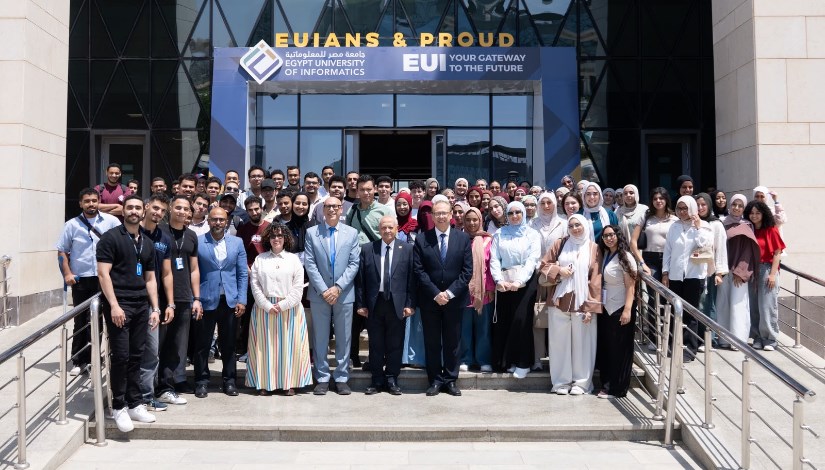
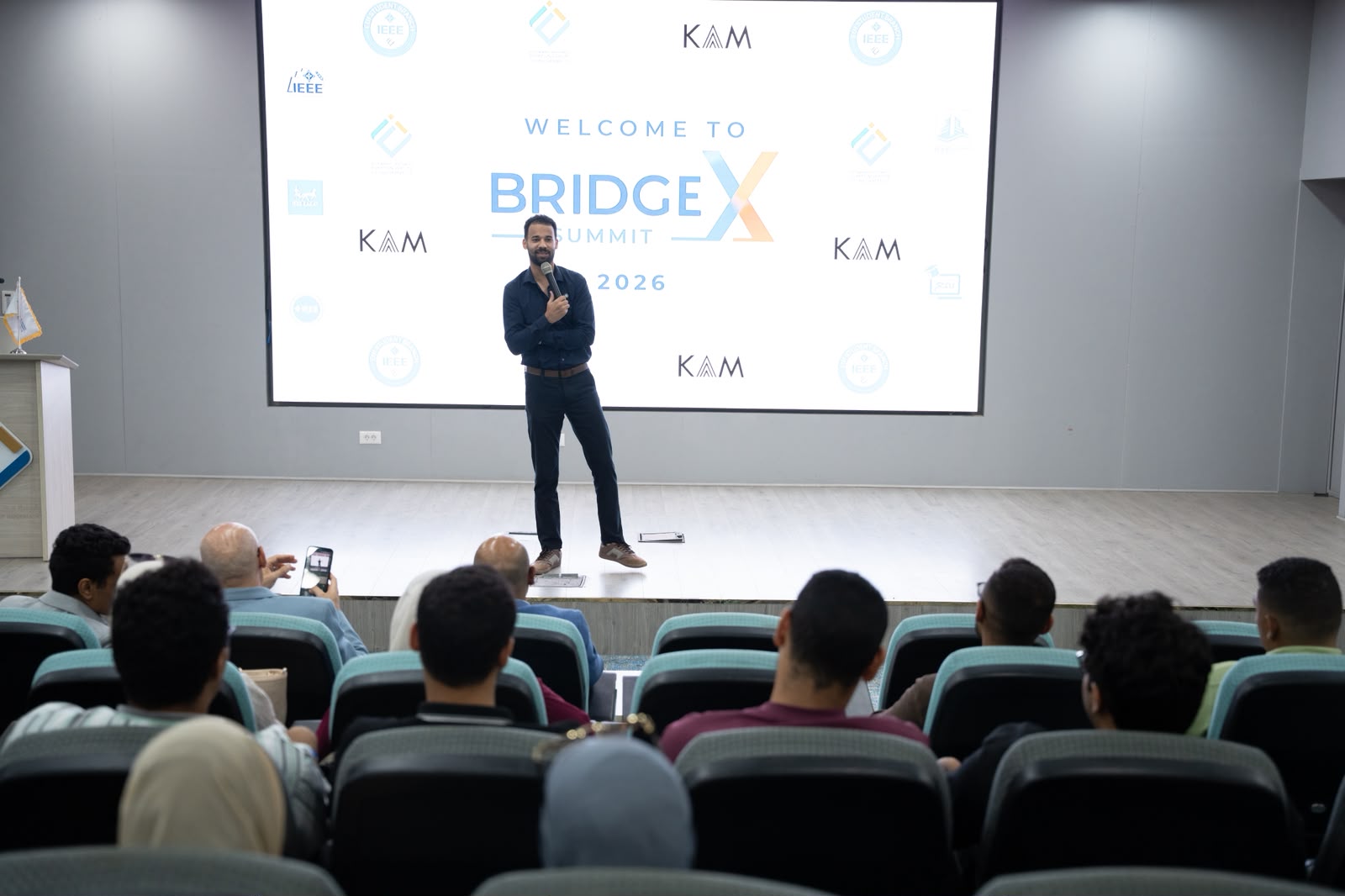
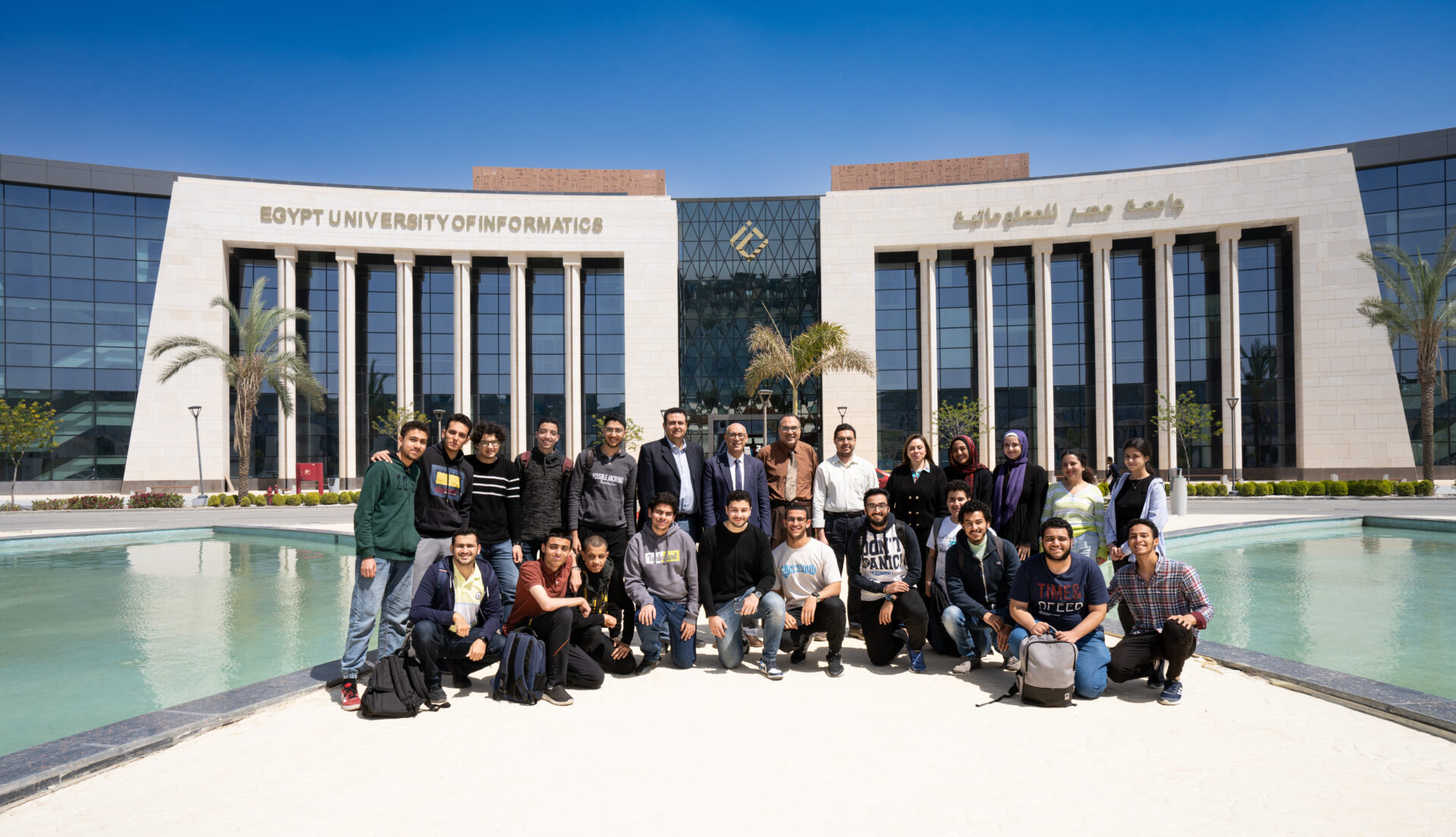
The BRIDGEx 2026 Forum, organized by the IEEE Egypt University of Informatics (EUI) Student Branch, kicked off with students from ten public, private, and national universities across seven governorates attending alongside experts in technology, industry, entrepreneurship, and professional development. The event aimed to prepare students for the job market and to help them build a practical understanding of the opportunities available to them.
Dr. Mohamed Ismail, Head of the Student Activities Office at EUI, said the core idea behind BRIDGEx was to give students hands-on exposure to different fields — including their challenges and opportunities — while letting them learn from the real-world experiences of experts and industry professionals. This, he said, helped students build their capabilities and prepare for the shift from university to professional life. He explained that BRIDGEx was a full-day event during which participants met a number of experts, each bringing a distinctive professional background, achievement, or story, united by their role as inspiring models for students.
Among the featured experts was Amr Helal, who brought extensive experience in artificial intelligence, data science, and practical technology education. He shared his professional experience in AI, discussed the latest developments in the field and where it was headed, and highlighted the opportunities and practical applications it offered students and technology enthusiasts. His session gave students a first-hand look at the current state of artificial intelligence and what lay ahead.
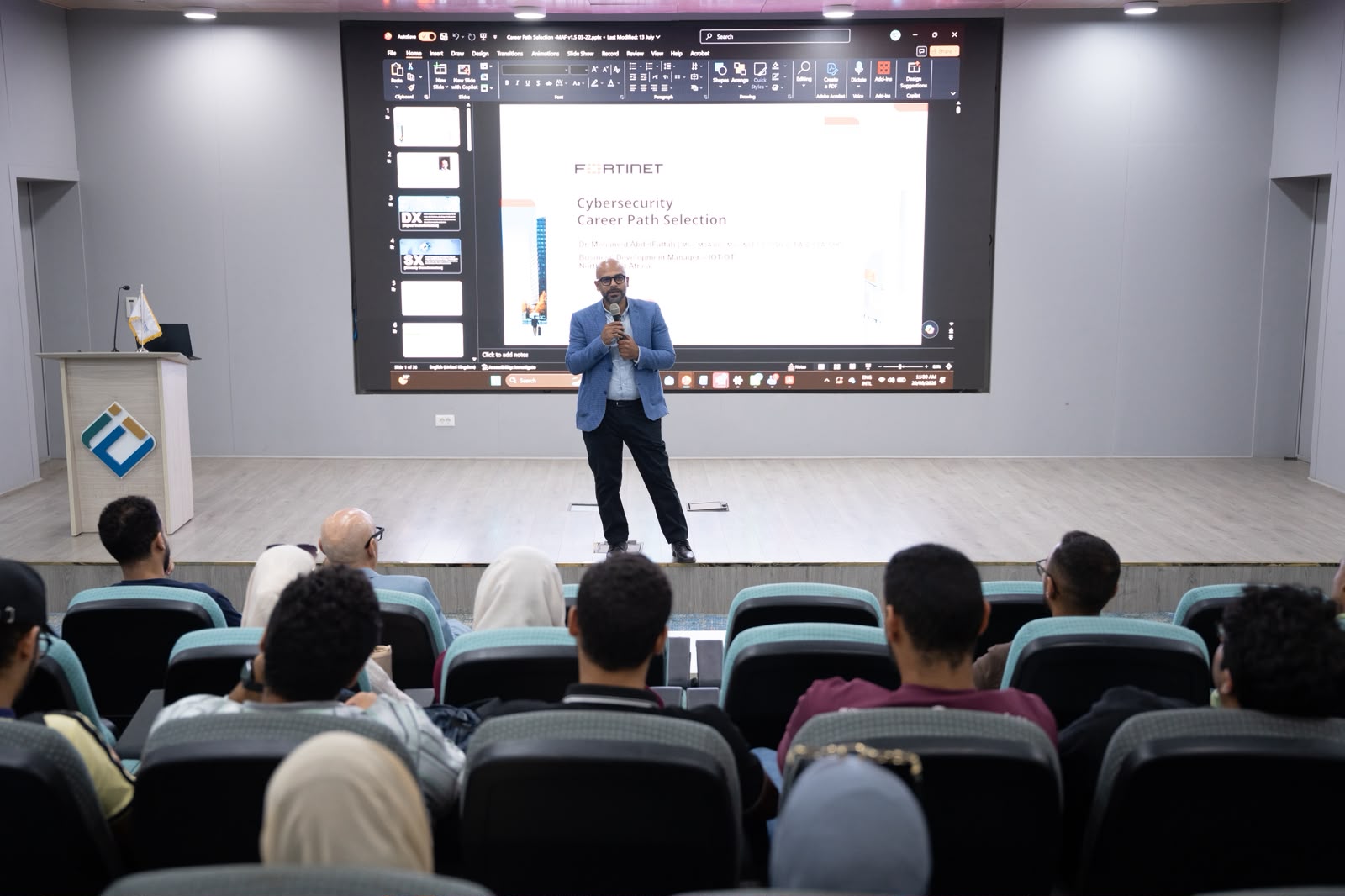
Dr. Ismail noted that the second expert was Dr. Mohamed Abdel Fattah, who had more than 26 years of experience in digital transformation, IT/OT security, and critical infrastructure protection. Over the course of his career, he had spoken at international conferences including IEEE, ITU, and the Arab Security Conference, and had led several cybersecurity initiatives through his roles at leading companies and institutions, including Fortinet. His session focused on the future of cybersecurity, emerging technologies, and the skills students would need to keep pace with the field's rapid development.
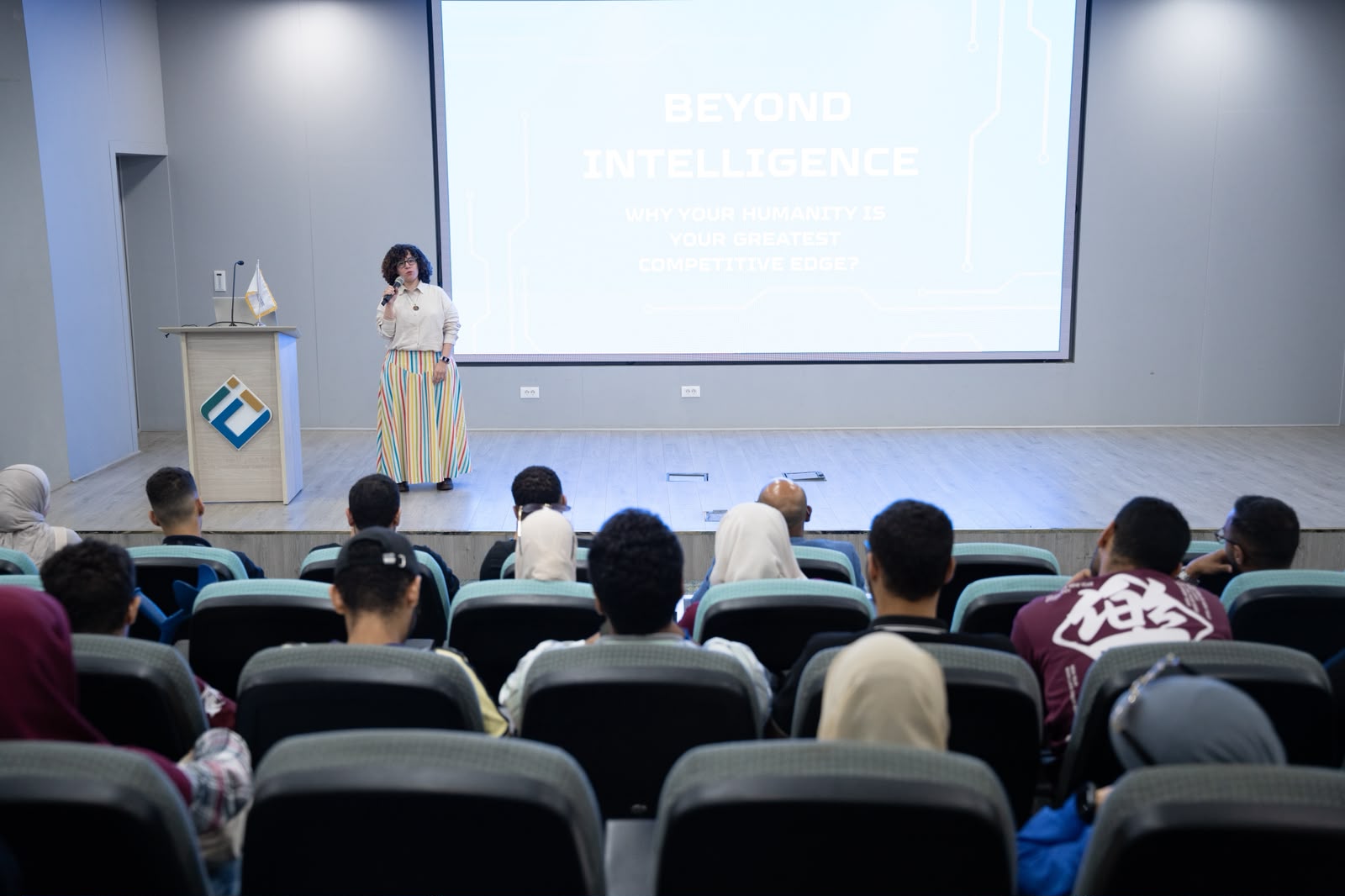
The third session featured Tasneem Ali, who brought extensive experience in information technology along with expertise across areas including enterprise infrastructure, AI, IoT, and cloud computing. She had also worked as an expert across sectors such as telecommunications, healthcare, automotive, and banking. Tasneem shared her technology journey and professional experience with students, emphasizing the importance of soft skills alongside technical expertise and continuous development, and discussed how students could better prepare for professional life and navigate challenges beyond the purely technical. She stressed that success in the technology sector depended not only on technical skills but also on the ability to communicate, lead, learn, and adapt.
Separately, Egypt University of Informatics achieved another milestone when its IEEE EUI Student Branch won the Outstanding Student Branch Award from the Institute of Electrical and Electronics Engineers (IEEE), one of the world's largest technology organizations. The award was presented at the IEEE Region 8 level, which encompassed 59 countries across North Asia, Africa, Europe, and the Middle East.
The award was received by Ahmed Zaitoun, a fourth-year Electronics and Communications Engineering student and president of the EUI IEEE Student Branch. The ceremony took place on the sidelines of the IEEE Region 8 Student and Young Professionals Conference, held every two years in a different city — this year in Kraków, Poland, the country's second-largest and one of its oldest cities.
The award was based on several criteria, including the leadership skills demonstrated by branch officers, their contributions to research dissemination, their ability to secure employment opportunities before graduation, and their capacity to connect technology with community service. The conference served as a platform for knowledge exchange, professional development, networking, and engagement with a diverse international community, combining technical sessions with interactive workshops that helped participants develop soft and leadership skills, while social activities offered opportunities to meet new people and experience different cultures.